31. Mai 2023
Brands Update - May 2023 – 9 von 9 Insights
In other news
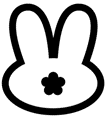
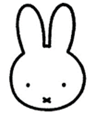
The EU Board of Appeal has upheld an opposition against an EU trade mark application on the basis that the use of the sign for adult sex toys would damage the reputation of the earlier mark. Both marks were purely figurative marks consisting of a figure of a rabbit with oval-shaped ears represented in a cartoon style. The earlier mark had a strong reputation in the Netherlands for books, clothing and games.
The Board of Appeal found there to be a link between the two marks, considering the similarity between the signs, the overlap of the relevant public (which could include adults) and the high reputation and distinctive character of the earlier mark. As a consequence of that link, the Board of Appeal concluded that use of the contested mark for an adult sexual stimulation kit would devalue the image that the earlier mark had acquired amongst the relevant public. Relevant to this was that the earlier mark appealed to children - it instilled a sense of safety and stood for innocence and lack of controversy, which were characteristics that were incompatible with the use of the contested mark.
| The mark applied for | One of the earlier rights |
 |
 |
In a consolidated judgement, covering many oppositions and invalidation actions, the UK Intellectual Property Office (UKIPO) has explored grounds of bad faith and trade mark squatting by a Chinese company, Xiamen Vetements Brand Management, and its attempts to take advantage of a then up-and-coming Swiss clothing brand, VETEMENTS AG.
Vetements alleged that Xiamen was using the Vetements name in Asia, and copying products sold by Vetements, while taking advantage of China's first to file trade mark system and filing applications for VETEMENTS before the Swiss company was able to. Chinese malls and distributors were requesting evidence from Xiamen to prove its link to Vetements, so Xiamen set up VTMNS Group Ltd, a UK company, to try to register Vetements trade marks in the UK to use as such proof. The marks were then assigned to Xiamen, and other links between the companies were established.
Vetements launched in 2014 and was able to show evidence of the development of its brand, as well as significant press coverage surrounding the launch. It had invested a substantial amount in marketing, as well as acquired the Vetements domain name and filed over 100 trade mark applications, worldwide. In its evidence, it was able to show fake products and unauthorised use of its brand by Xiamen online, as well as evidence of actual confusion and disputes relating to the company name. It also showed that VTMNS had made no use of the VETEMENTS marks in the UK, and its UK company accounts were dormant from 2020 to 2021.
VTMNS's evidence had significant inconsistencies, which Vetements demonstrated to the UKIPO, and which VTMNS did not rebut. Vetements' claims that the VTMNS marks had been filed in bad faith were upheld, with the UKIPO commenting that even the most naïve business person would struggle to believe that the actions of Xiamen were anything other than fraudulent. VTMNS marks were therefore refused and/or invalidated for bad faith.
The EU Intellectual Property Office has refused an application to register a graphic representation of Charlie Chaplin's character, Tramp, as a trade mark in Classes 9, 35, 38, 41 and 42.
The refusal was based partly on descriptiveness, with the Office holding that the sign would be perceived merely as a reference to the content of the services in class 41 (entertainment services etc). It was also based on non-distinctiveness, with the decision referencing the fact that the sign had an exceptional reputation and positive connotations (humanism and anti-totalitarianism) which would be known by the relevant public. Given this, the Office considered that the sign would merely be perceived by the average consumer as a promotional and laudatory indication, with the Office noting that the use of film characters for advertising is common in many sectors.
The decision is notable for the number of subjective inferences on the part of the Office (presumably because Chaplin's Tramp character is so well-known).

Trade mark licences are entered into by all sorts of businesses all the time and command enormous value, but they are rarely litigated. So any case about them will usually have some issues of general interest. The analysis of the recent English High Court battle about the licence the well known Virgin group granted to a US domestic airline, Virgin America, is coloured by the specific US airline regulatory regime and is therefore highly fact specific. Nevertheless it contains a couple of useful reminders of obvious points.
The dispute arose when Virgin America was acquired by and merged into Alaska Airlines, and the stylish cabin safety videos for which Virgin America was known were no more. Every aspect of the airline was rebranded to Alaska and use of the Virgin America name ceased. Because of the particular regulatory regime for airlines operating in the US, the owner of the Virgin brand could not exercise too much control and so the licence permitted Alaska not to use the Virgin brand so long as it continued paying a minimum royalty. Could Alaska stop paying any royalties? After a trial expected to cost some £7 million we got the answer. No.
This was a case about US airlines, but English law was chosen to apply. English law of contractual interpretation aims to identify the intention of the parties when they entered into the contract and their knowledge at the time. It is easy to assume that intention is all one way: a licence is granted but when use ceases the accompanying obligations cease. But the interests and intention of the licensor in ensuring that the brand is either used or, if not, that it receives some compensation for not being able to earn revenues from another licensee, need to be taken into account, too.
It is also notable that trade mark law will often play only a minor and sometimes, as here, no part in the argument. Meanwhile, choice of law and careful analysis of the applicable principles of contractual interpretation will have an outsize role.
A recent EU trade mark application helps illustrate the sorts of marks that are not contrary to public policy or morality but might nonetheless still be objectionable for lack of distinctiveness.
An application to register the mark FUCKING AWESOME for various goods (including eyewear, bags, clothing and skateboards) in the EU was initially refused on the basis that it lacked distinctiveness and was contrary to public policy and accepted principles of morality. The Board of Appeal upheld the objection that the mark was devoid of distinctive character but overturned the objection that the mark was contrary to public policy/morality. The latter seems consistent with current EU Intellectual Property Office practice as there are a number of registered marks containing the word FUCK (and more containing other profanities).
The applicant appealed the lack of distinctiveness objection to the General Court. Unsurprisingly, the Court agreed with the EU Intellectual Property office that the mark lacks distinctiveness since it conveys a clear and unequivocal message which does not require any interpretation. It will be perceived purely as a promotional message, not as an indication of origin.
The UK IP Office has issued a Practice Amendment Note (PAN) (1/2023) concerning the circumstances when it will raise bad faith of its own volition at the trade mark application stage. The PAN has been issued in response to the decision in the Ronaldinho case last year.
Before this PAN was issued, the Office would only raise a bad faith objection of its own volition if the mark applied for contained the name of a famous person (and even then, only rarely). In the Ronaldhino case, the Appointed Person commented that it was for third parties to enforce their rights in their well known names, not for the Office to do so at the application stage. This risks the Office being judge, jury and executioner.
It noted that the Registrar of the Office has the power to apply to the court to invalidate a registration on the grounds of bad faith if they so wish. It is usual for the Office to consider its practice in response to such comments and it has done so here. In fact, the Office has seemingly pushed back against the decision, noting that:
- Trade mark legislation requires the Registrar to conduct an examination of an application to ensure it meets the absolute grounds requirements for registration.
- In Trump International v DTTM Operations, the High Court gave guidance about the approach the Office should adopt when dealing with bad faith and there was no suggestion that it could not take such an approach during the examination of an application.
Under the new PAN, applications are presumed to be filed in good faith. If the examiner, whilst conducting research as part of the examination process, identifies certain facts that clearly appear to rebut that presumption of good faith, the Office will present those facts (with an explanation) to the applicant as part of the examination report. The Office will give the applicant an opportunity to provide a plausible good faith explanation for filing the trade mark, which the Office will consider.
According to the PAN, in most cases, it is unlikely that the Office will be able to identify sufficient facts and information to rebut the presumption of good faith. However, it identifies the following non-exhaustive examples which might be sufficient - evidence that the applicant is:
- engaged in trade mark squatting
- filing trade marks not for their own trade mark use but merely for the purpose of creating conflict or dispute with others
- intentionally seeking to mislead the public (instrument of fraud).
The mere fact that a trade mark comprises or contains the name of a famous person (or a famous or well known business) might not in itself be sufficient to rebut the presumption of good faith, but that fact might form part of the overall assessment of the likely motivation of an applicant.
In dieser Serie
NFTs, virtual goods, and services provided in the metaverse: UK IP Office issues guidance on classification
31. Mai 2023
A second bite of the cherry? Introducing new evidence in appeal proceedings at the EUIPO
31. Mai 2023
First ECJ decision on visibility and intended use in relation to complex products
31. Mai 2023

Related Insights

The CMA steps up its fight against fake reviews

HFSS promotion, placement and advertising: March 2026 update
