2025年7月8日
Brands Update - July 2025 – 4 / 8 观点
ENERGI/ENERJO and SkyKick
This recent UKIPO Opposition decision is a clear example of the application of the principles on bad faith confirmed by the UK Supreme Court in SkyKick. Overly broad specifications of goods and services that are not reasonably justified will not easily withstand a challenge of bad faith under Section 3(6) of the UK Trade Marks Act 1994 (TMA).
What has happened?
- The Opponent, SE Bicycles Company Ltd, opposed an application owned by Cashflow Corporation Ltd for likelihood of confusion (Section 5(2)(b) TMA) and bad faith (Section 3(6) TMA). Cashflow's application covered an extremely wide range of terms across Classes 1, 4, 7, 8, 9, 11, 12, 35, 36, 37, 39, 40, 42 – some 80 pages of goods and services!
- Cashflow was found to have intentionally attempted to take advantage of the trade mark registration system to obtain a registration with unduly wide protection, so the opposition succeeded on the ground of bad faith.
- Brand owners need to carefully consider the appropriate coverage of their registered trade mark protection so as to not go overboard and open themselves up to challenges for bad faith. This applies to new filings, as well as existing registrations (the scope of which should be considered before they are relied upon).
- The decision is in line with guidance (just issued by the UKIPO) for trade mark applicants following the SkyKick decision. It explains that Examiners will now actively consider whether specifications are “manifestly and self-evidently broad”, and may raise bad faith objections during the examination process. Such objections will be raised where an application covers all 45 classes or all goods in Class 9, as well as in other circumstances. For now, it won't object to the use of terms considered broad such as computer software or clothing. It means that applicants should be ready to explain their commercial reasons if challenged on the scope of an application.
For more on the SkyKick decision, see here.
Want to know more?
The Opposition
The application covered an extremely broad range of goods and services, and it was difficult to see how one business could offer them all. To name a few:
- Class 1 included "aluminimum acetate", "chemical coating for ophthalmic lenses", "fish meal fertilizers" and "flashlight preparations"
- Class 8 included "truncheons/bludgeons/police batons", "punch rings [knuckle dusters]", "sand trap rakes" and "vegetable choppers"
- Class 9 included "ski goggles", "x-ray films", "screen saver software", "body armor" and "mobile phone cases featuring rechargeable batteries"
- Class 11 included "water treatment equipment", "motion sensitive security lights" and "decontamination showers"
- Class 12 included "aeroplanes", "anti-glare devices for vehicles", "delivery drones" and "trams"
- Class 35 included "business auditing" and "retail services relating to bakery products"
- Class 36 included "financial services" and "health insurance underwriting"
- Class 37 included "fur care, cleaning and repair", "mining extraction" and "snow removal"
- Class 39 included "distribution energy", "pleasure boat transport" and "rental of horses for transport purposes"
- Class 40 included "distillation services", "tanning" and "taxidermy"
- Class 42 included "golf course design", "oil field surveys" and "weather forecasting".
The opponent had earlier rights in various ENERGI trade marks, but due to failure to prove use of its older registrations the opposition proceeded comparing the following marks.
 |
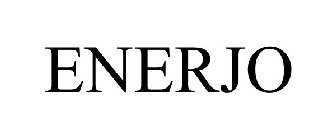 |
|---|---|
| The earlier mark | The applicant's mark |
The Hearing Officer found that there was no likelihood of confusion, partly due to the heavy stylisation that distorted the appearance of the earlier mark. The opposition was then examined on the bad faith claim. As the opposition was ongoing before SkyKick was decided, it was suspended pending the outcome. After SkyKick was decided, the suspension was lifted and the parties were invited to make further submissions. While SE Bicycles filed further submissions, Cashflow did not.
An important note here is that Cashflow was unrepresented, both in its filing of the application and defence of the opposition.
The applicant's position and application of SkyKick
In its submissions, Cashflow argued that its trade mark application was filed to “establish, operate commercial and industrial enterprises, create jobs and positively contribute towards the economic development of United Kingdom”. It also argued the following (with applicant's emphasis):
“ENERJO is a coined fancy term invented by the applicant with the genuine INTENTION to produce and sell commercial products and services worldwide and the trademark application filing in UK is to seek clearance from the UK IPO prior to entering into and starting commercial operations in UK market.
Since the applicant has sufficiently proved and that there has never ever been any bad faith INTENT, the Hearing Officer is requested to DISMISS the Opposition in its entirety and allow our good faith application to proceed towards registration.”
Cashflow further argued that the fact it hadn't covered all 45 Nice Classes shows that it had been selective and therefore had a genuine intention to commercialise the goods and services. However, this was not viewed favourably by the Hearing Officer – that cannot be a justification in itself.
The above arguments were too limited and vague – they did nothing to prove that Cashflow had a genuine intention to use the mark across the specified goods and services. The sheer size and disparate nature of the specification was telling – in fact, the Hearing Officer indicated they didn’t think there was any reasonable business intention at all. The UKIPO expects reasonable explanations and justifications from the owner as to why such broad protection is warranted.
What does this mean for you?
If you are thinking about your initial trade mark protection, a balance must be struck between protecting your core business activities and providing for future innovation. Our Specification drafting: a quick guide can help.
Remember that the impact of the SkyKick decision doesn’t just apply to new applications – existing registrations can be invalidated for bad faith. Brand owners with established trade mark portfolios might consider auditing their existing registrations now or at least prior to relying on any. This might save the time of having to defend costly side actions about bad faith which might not even impact the overall case.
本系列内容
Supreme Court says YES to post-sale confusion…. but Iconix still loses
Key takeaways
2025年7月2日


